Food chains and food webs basics
Learn how energy flows through Singapore's ecosystems here.
Last updated 26 May 2026
It's eat or be eaten! All living things are connected to other living things through food chains and food webs. Learning about these relationships help us understand how species can interact with each other, and how things might change when new species are added or removed from the environment.
What is a food chain?
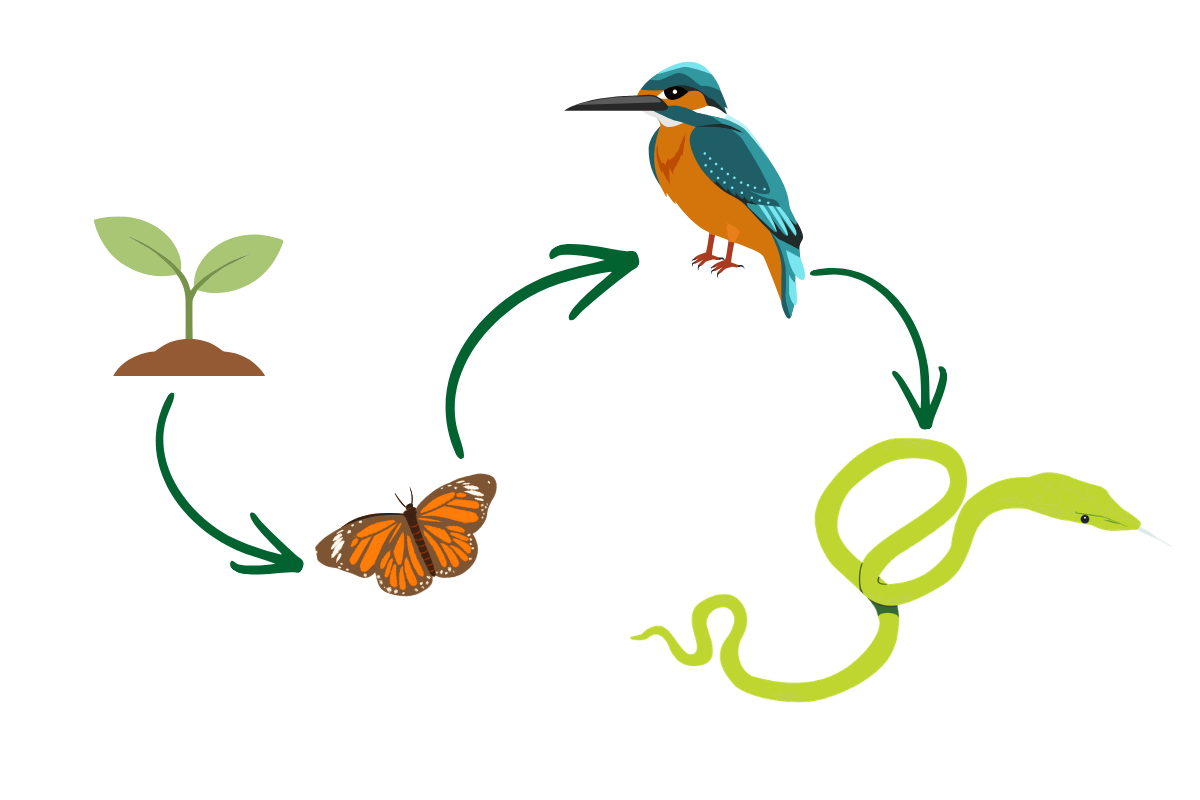
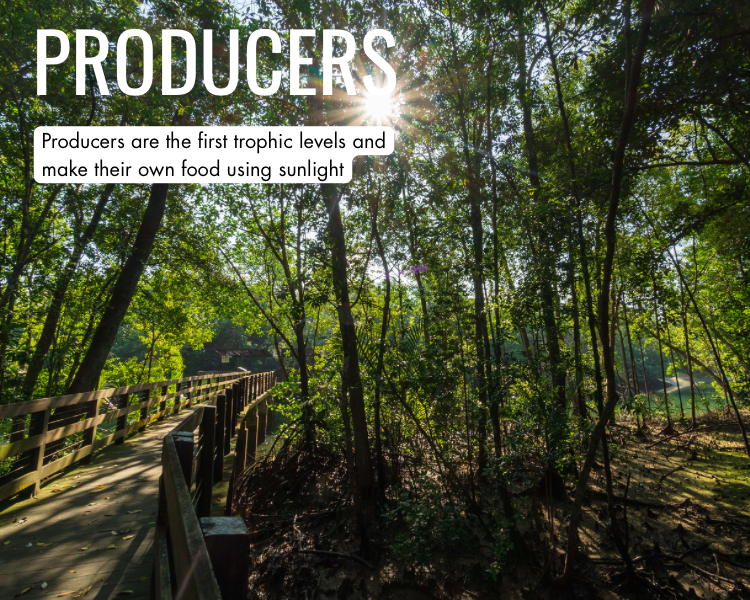
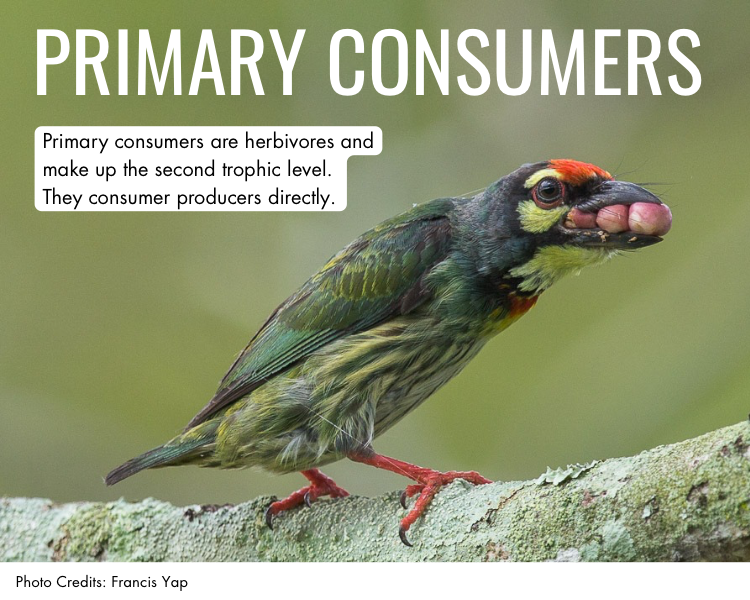
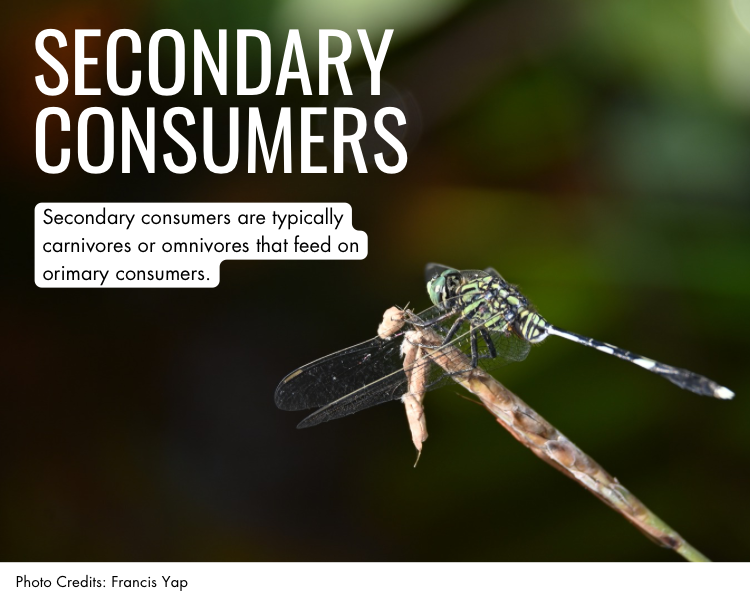
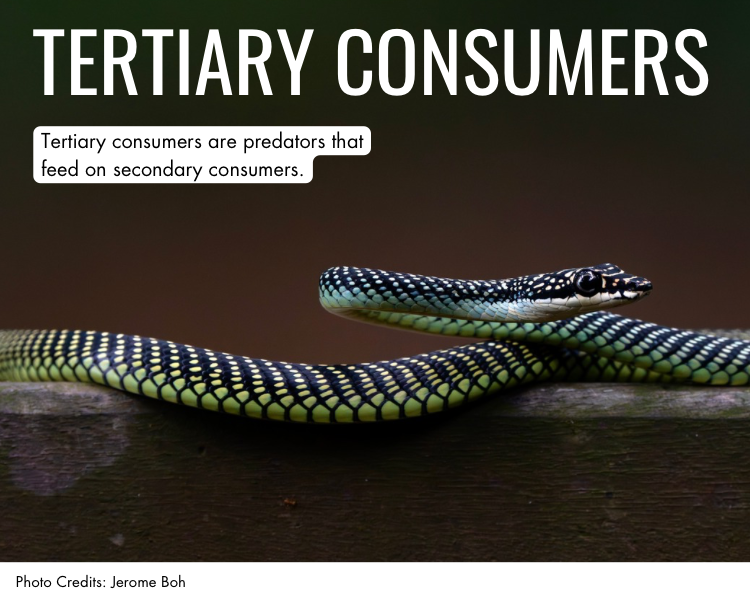
A food chain is a simple, straight-line sequence showing what eats what in nature. It traces the path of energy as it moves from one organism to the next. The chain always begins with a producer, usually a plant or algae, that captures energy from sunlight to grow. A consumer, otherwise known as animals, eats the producer. Animals then eat each other, until the chain ends with a top predator that nothing else hunts.
The arrows in a food chain represent the flow of energy. When you see "grass → grasshopper → frog → snake", the arrow means "is eaten by" or "provides energy to". Energy moves in one direction only: from the producer to the consumer, and from prey to the predator.
Trophic levels
Each step in a food chain is called a trophic level, from the Greek word trophe, meaning nourishment. Energy is lost at every trophic level as different organisms consume each other. This means that producers have the most energy from just the sun, but the consumer at the top must eat a lot of other organisms to get the same amount of energy!
Only about 10% of the energy from one trophic level is passed on to the next — the rest is used up by the organism for its own life processes, or lost as heat.
From food chains to food webs
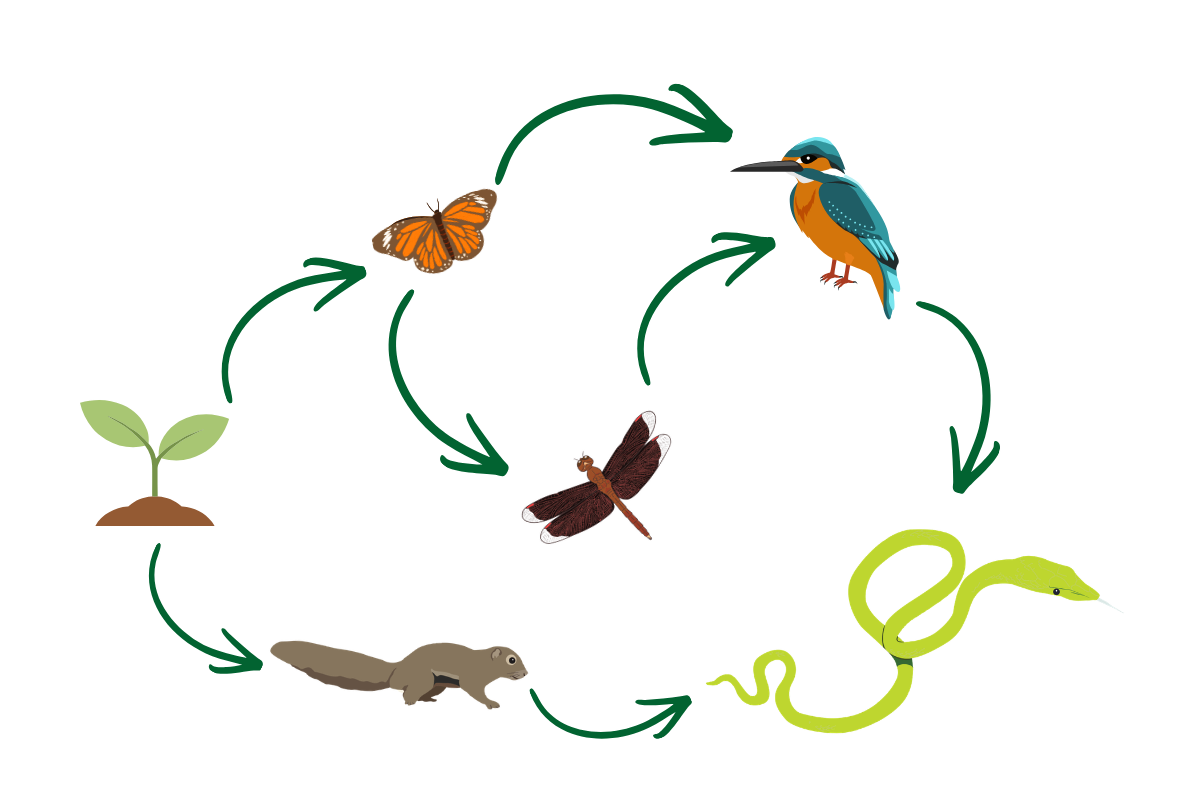
Animals rarely rely on only one source of food. Herbivores will eat different species of plants, carnivores will hunt a variety of prey, and omnivores will eat both plants and animals! When you link all these feeding relationships together, food chains become food webs, which show how complex an ecosystem with many species can be.
Mapping out food webs show us how resilient or fragile an ecosystem can be. If one species disappears, we can then see which other species might be affected, and how severely.