Hermit Crab
About the Hermit Crab in Singapore
Last updated 31 May 2026
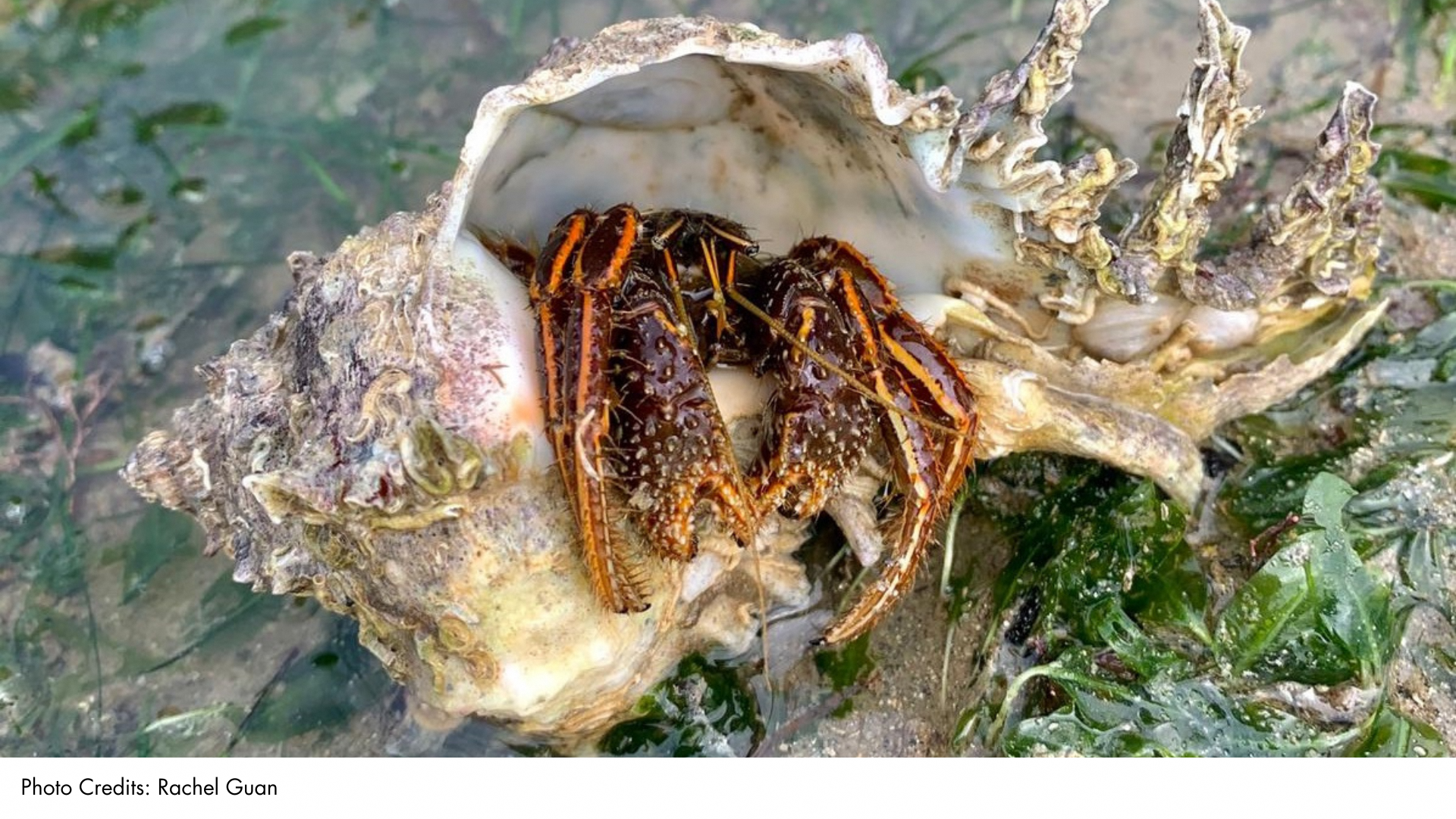
Unlike true crabs, the Hermit Crab (Anomura) does not produce a hard exoskeleton to protect their soft bodies. Instead, they occupy shells abandoned by other marine animals such as snails.
These shells offer protection so crucial to their survival that Hermit Crabs leave only to reproduce, or to find a larger home when they have outgrown their current one.
Identifying features
Check out some of the identifying features of a Hermit Crab below.
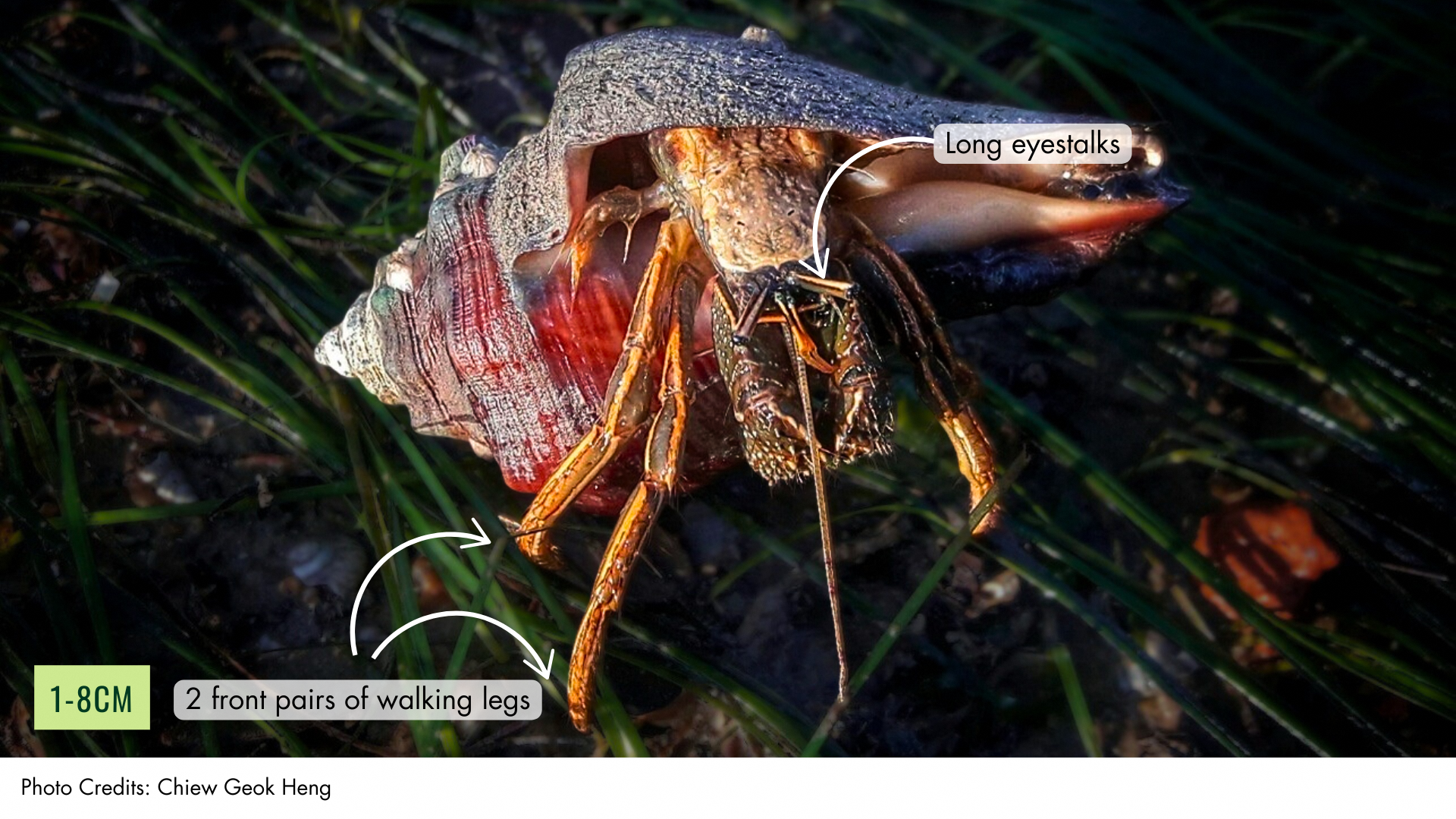
This is an Orange-striped Hermit Crab (Clibanarius infraspinatus).
Hermit Crabs have long eyestalks and two front pairs of walking legs.
Habitat and ecology
Hermit Crabs are abundant in mangroves, as well as across a wide range of habitats with the intertidal zone. As opportunistic scavengers, Hermit Crabs are responsible for breaking down organic matter – a key step in nutrient cycling within the ecosystem.
Did you know?
To find a perfectly-sized shell for a home upgrade, Hermit Crabs may gather to form what is known as a ‘vacancy chain’. They line up in order of size, then each crab simultaneously vacates its shell while moving into the next largest one.
This cooperative behaviour allows Hermit Crabs to minimise the amount of time spent outside their shells while finding a new home.
Frequently asked questions
Q: What is the difference between the Hermit Crab and the Marine Snail?
When hidden away in their shells, it may be hard to tell a Hermit Crab from another shelled animal, such as a snail. Hermit Crabs have legs and move in quick, running/darting movements, while snails use a smooth, muscular foot to glide (or hop!)
Learn more about the Hermit Crab!
Curious about the Hermit Crab? Here are some interesting articles you can read to learn more about them.