Hawksbill Turtle
About Hawksbill Turtles in Singapore
Last updated on 15 June 2026
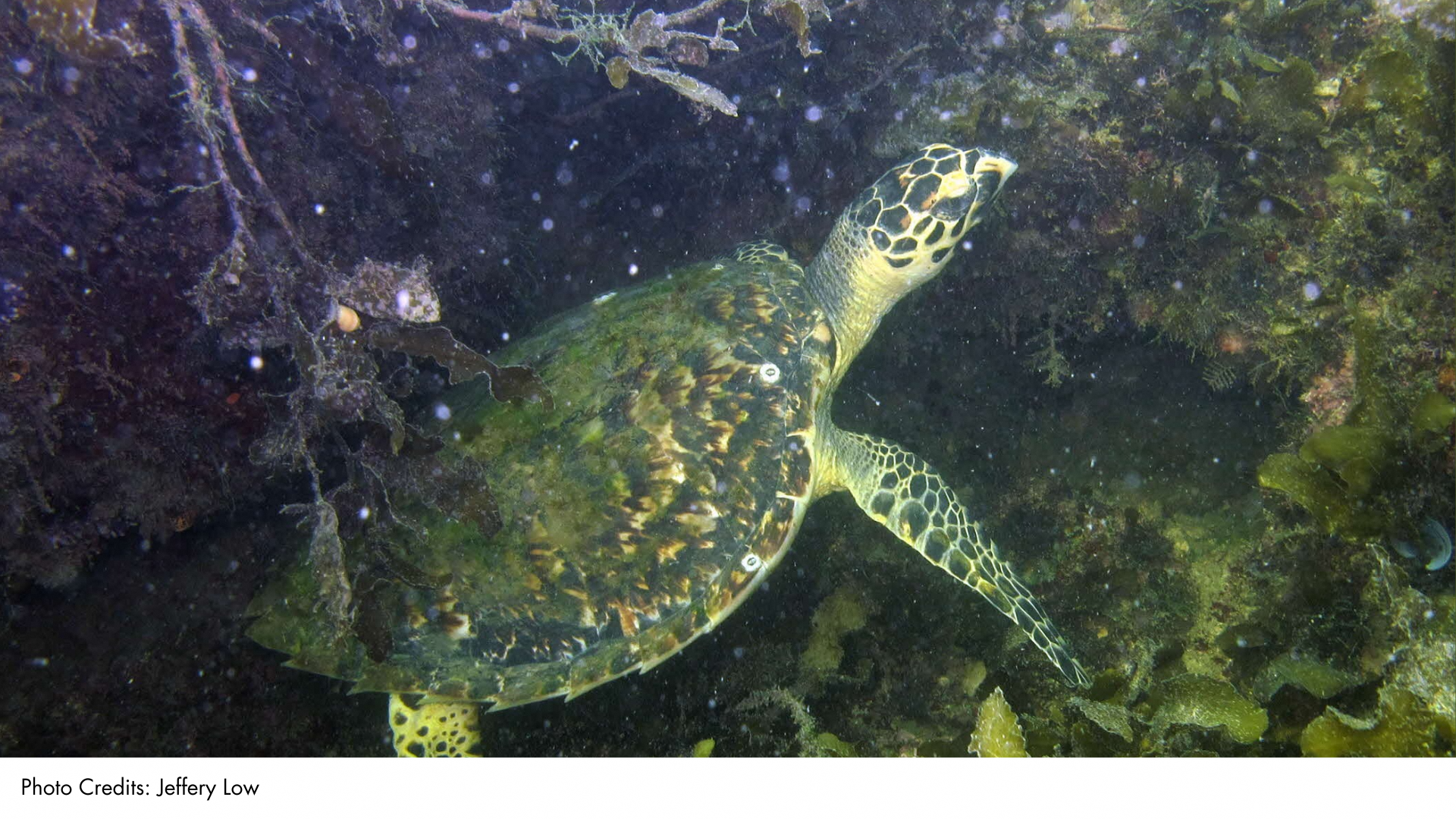
The Hawksbill Turtle (Eretmochelys imbricata) is one of the two sea turtle species that can be found in Singapore. Between May to October, they usually come ashore to lay their eggs under the cover of night.
Buried in the sand, Hawksbill Turtle eggs incubate for 55-60 days before the hatchlings emerge. Female Hawksbill Turtles can lay 100-200 eggs at a time, but only a small fraction of these survive to adulthood due to predators and environmental challenges.
Identifying features
Check out some of the identifying features of the Hawksbill Turtle below.
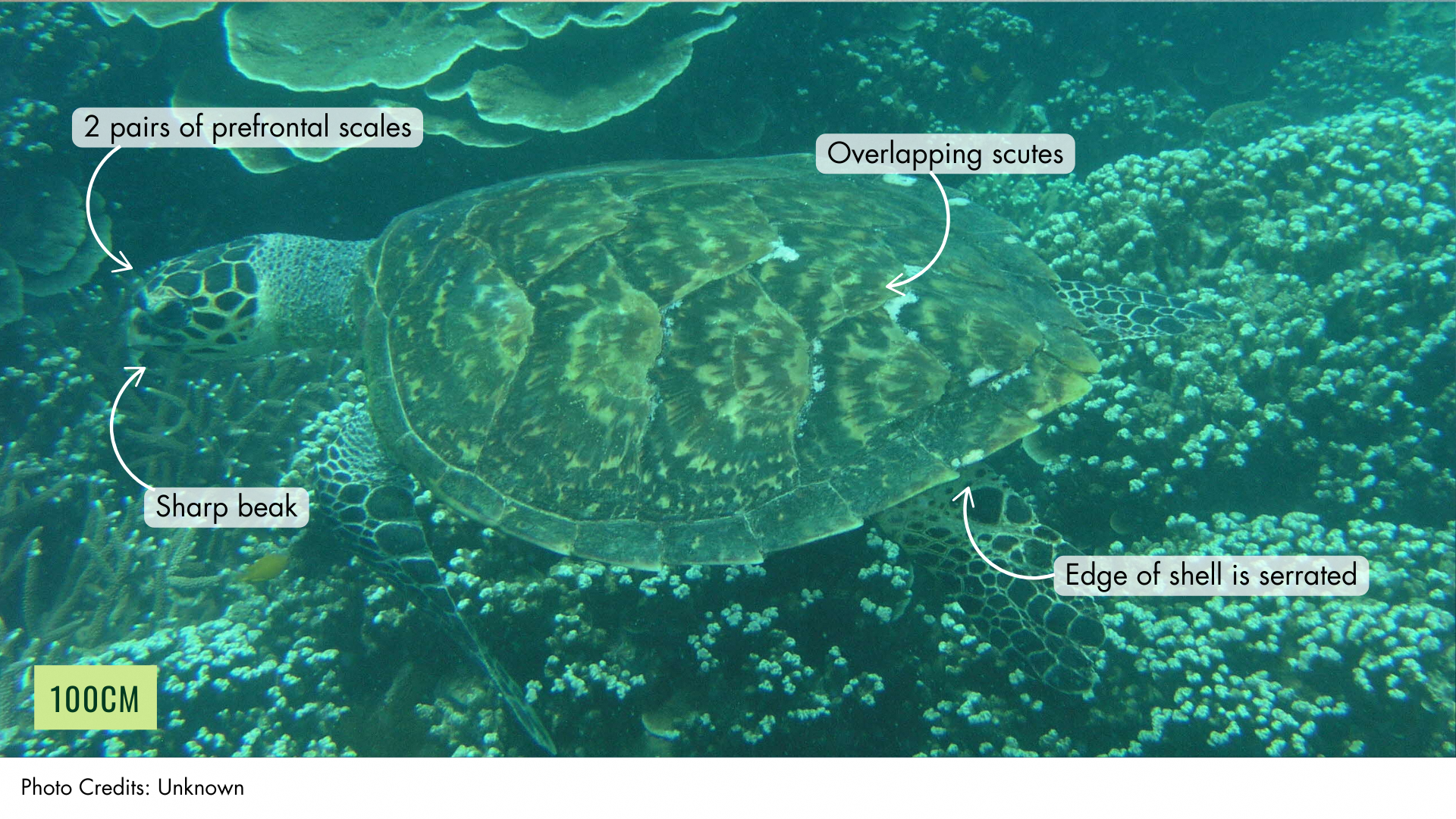
Hawksbill Turtles are characterised by their sharp beaks. Their shells have serrated edges and overlapping scutes. While hatchlings are often only several centimetres long, adults can grow up to 100cm in length.
Habitat and ecology
Hawksbill Turtles are omnivorous, and their favourite food is often sea sponges. They have an estimated lifespan of 50-60 years. When it is time to lay their eggs, Hawksbill Turtles will return to the same area of beach where they hatched.
Did you know?
Hunted for the ornamental value of their shells, Hawksbill Turtles are now Critically Endangered. If you are lucky enough to spot one, make sure to keep a safe distance and avoid shining bright lights.
Spotted a Hawksbill Turtle?
Contribute to Hawksbill Turtle conservation efforts by calling the NParks hotline at 1800-471-7300 to report a sighting.
Learn more about the Hawksbill Turtle!
Curious about the Hawksbill Turtle? Here are some interesting articles you can read to learn more about them.