
How citizen science contributes to biodiversity conservation
Read more about where our citizen science data goes and how it contributes back to conserving our native biodiversity.
Last updated on 18 May 2026
Contributing back to biodiversity conservation
With Citizen Science programmes, scientists are often able to collect more data than they would have otherwise been able to, leading to more robust scientific data. The data collected allow scientists to monitor population trends in species, which in turn inform decisions for conservation of our biodiversity.
The role citizen scientists play in collecting data provide valuable insight for scientists, also increasing our scientific knowledge as a whole.
Data collected from NParks' citizen science programmes continue to prove useful, contributing to the published books such as "A Review of Garden Bird Watch (2015-2019)", and research papers such as "Tropical bird communities benefit from regular-shaped and naturalised urban green spaces with water bodies".
A Review of Garden Bird Watch (2015-2019)
This book summarises five years of the Garden Bird Watch and features the survey trends of 50 garden bird species and is a testament of the commitment and support of all the citizen scientists who participated in Garden Bird Watch.
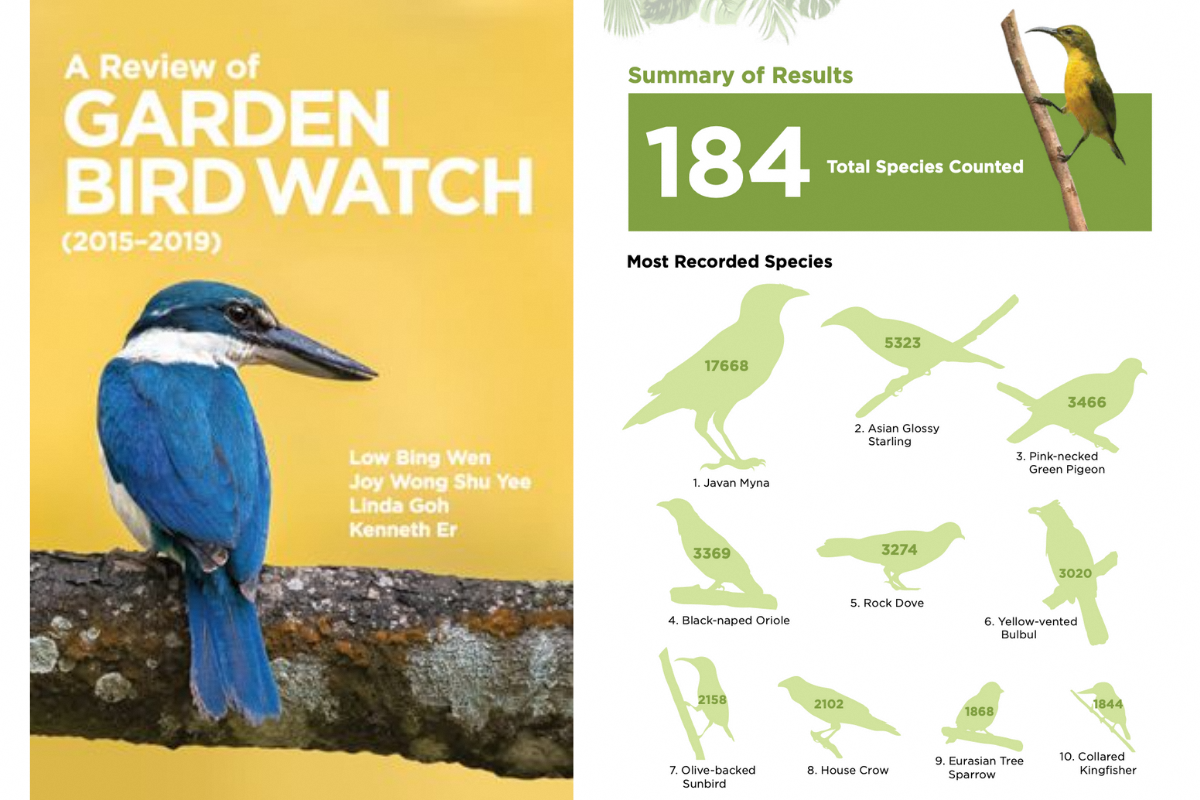
Overall, the preliminary data collected over the survey period showed that many of Singapore’s garden birds had either stable or increasing population trends. Of particular interest was the consistent increase in numbers of two nationally threatened species, the Oriental Pied Hornbill and Oriental Magpie-Robin. There was also an increase in the number of sightings of nectarivores, possibly as a result of the increased planting of native plants and the setting up of community gardens.
Data collected from the surveys have been applied to our conservation efforts for native birds, including the recovery of threatened species and key pollinators. Such efforts include the planting of native plants in our parks to provide food and habitat for native birds. The data gathered through Garden Bird Watch will help NParks to manage the balance in our parks for biodiversity conservation and recreation.
Tropical bird communities benefit from regular-shaped and naturalised urban green spaces with water bodies
This paper aimed to answer the question, "what are the factors that affect our local bird communities?", using data collected from the Garden Bird Watch over 5 years, with a total of 64 sites surveyed.
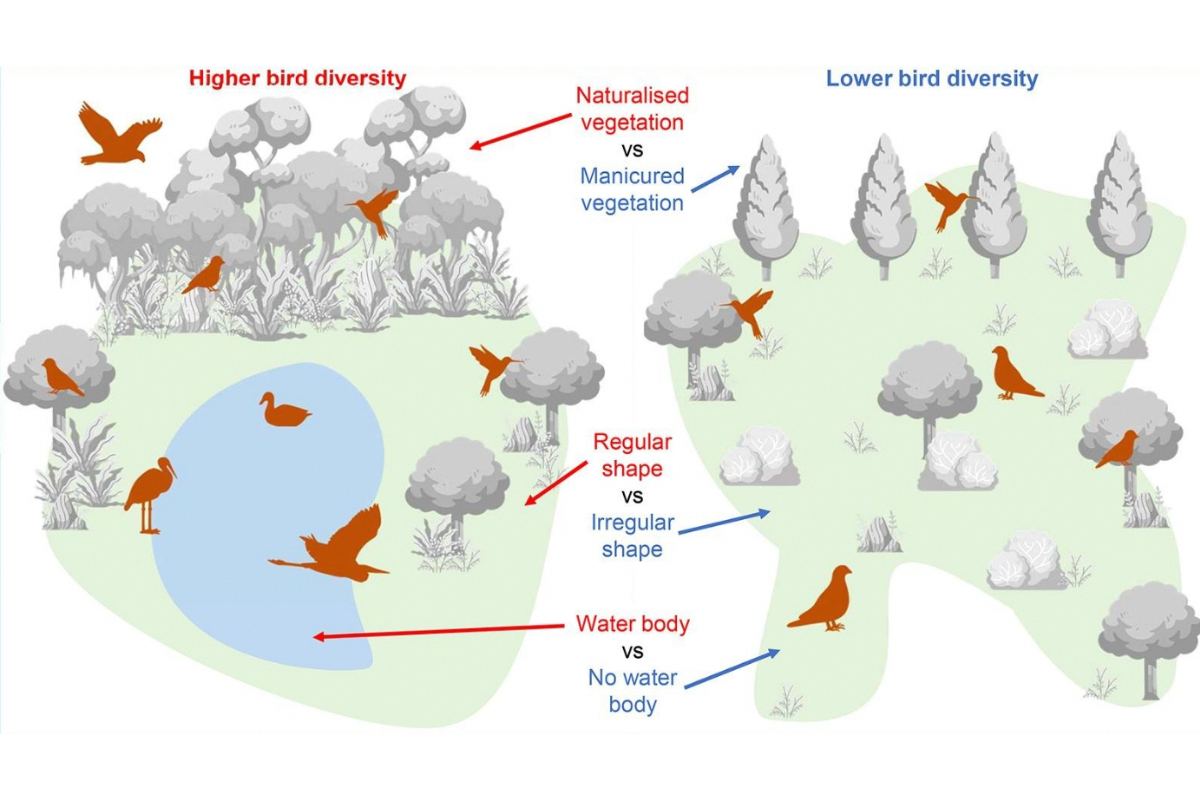
The findings show that parks with larger core areas, reduced edge effects, and semi-natural vegetation support a significantly greater variety of birds. Furthermore, the presence of freshwater bodies and urban wetlands was found to be a crucial factor in boosting bird diversity across these green spaces.
The study contributes to the understanding of bird diversity at multiple scales in a highly developed tropical city, showing that the long-term data collected from Citizen Science programmes could further provide an opportunity to study species interactions in greater detail, and informs the planning of our parks, and conservation strategies.
Ready to start your journey as a citizen scientist and contribute back to biodiversity conservation?
Read more about what it means to be a citizen scientist and find a citizen science programme to join.