Sumatran Palm Civet
About the Sumatran Palm Civet in Singapore
Last updated 3 June 2026
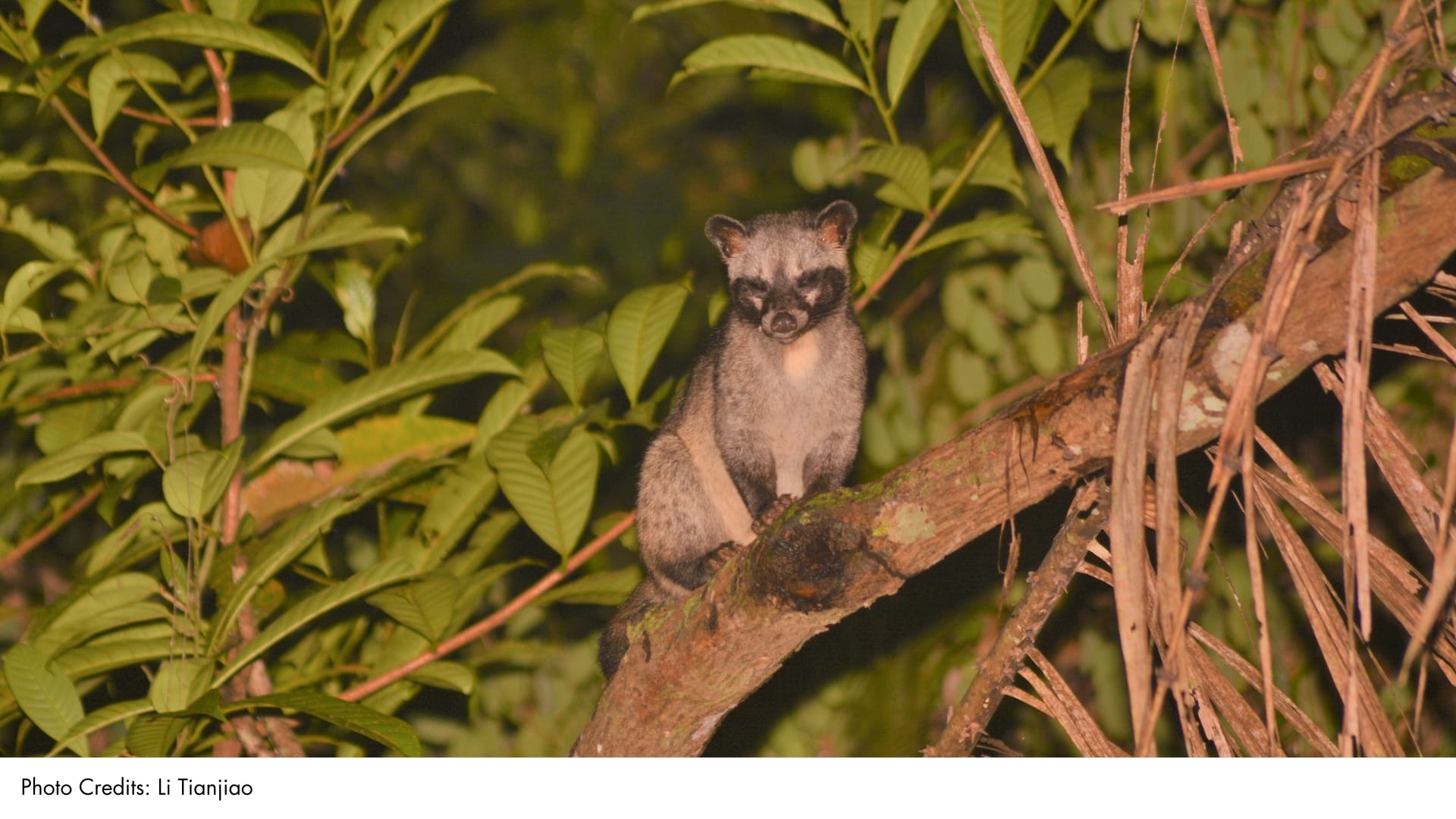
The Sumatran Palm Civet (Paradoxurus musangus) is a small, elusive mammal found in forests throughout Southeast Asia, including parts of Sumatra. Sometimes called “musang” locally, these civets are known for their secretive habits and nocturnal lifestyle.
Identifying features
Check out some identifying features of the Sumatran Palm Civet!
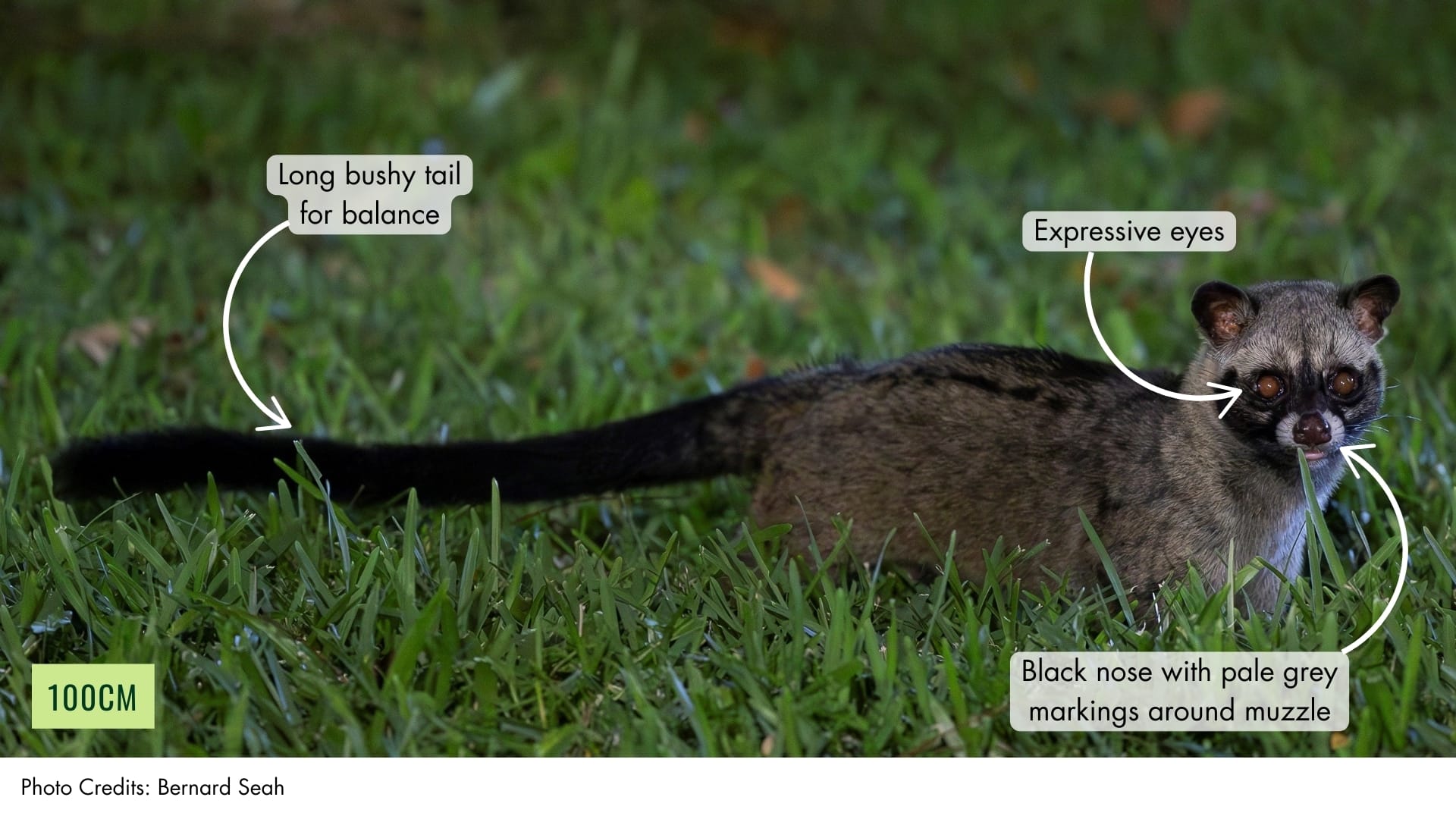
Sumatran Palm Civets have a slender body covered with coarse, dark brown or grey fur, and their face is pointed with a black nose and expressive eyes. They often have pale markings around their eyes and muzzle. Their long, bushy tail is almost as long as their body and helps with balance as they climb trees. Sharp claws and flexible toes make them excellent climbers.
Habitat and ecology
These civets are most often found in rainforests, but their adaptability means they sometimes venture into plantations or gardens in search of food. Sumatran Palm Civets are omnivores, eating a wide range of things like fruits, berries, small animals, and insects. They play an important role in the ecosystem by helping to spread seeds from the fruits they eat. Mostly active at night, they’re solitary creatures, quietly moving through the branches or along the forest floor, rarely seen during the day.
Did you know?
The Sumatran Palm Civet is famous for its unique connection to kopi luwak, a special type of coffee. Kopi luwak is made using coffee beans that have been eaten and passed out by civets! As the beans move through the civet’s digestive system, they undergo changes that some people believe improve the coffee’s flavor and aroma. After the beans are collected from the civet’s droppings, they are cleaned, roasted, and brewed into one of the world’s most expensive and talked-about coffees.
Learn more about the Sumatran Palm Civet!
Curious about the Sumatran Palm Civet? Here are some interesting articles you can read to learn more about them.