Sunda Pangolin
About the Sunda Pangolin in Singapore
Last updated 3 June 2026
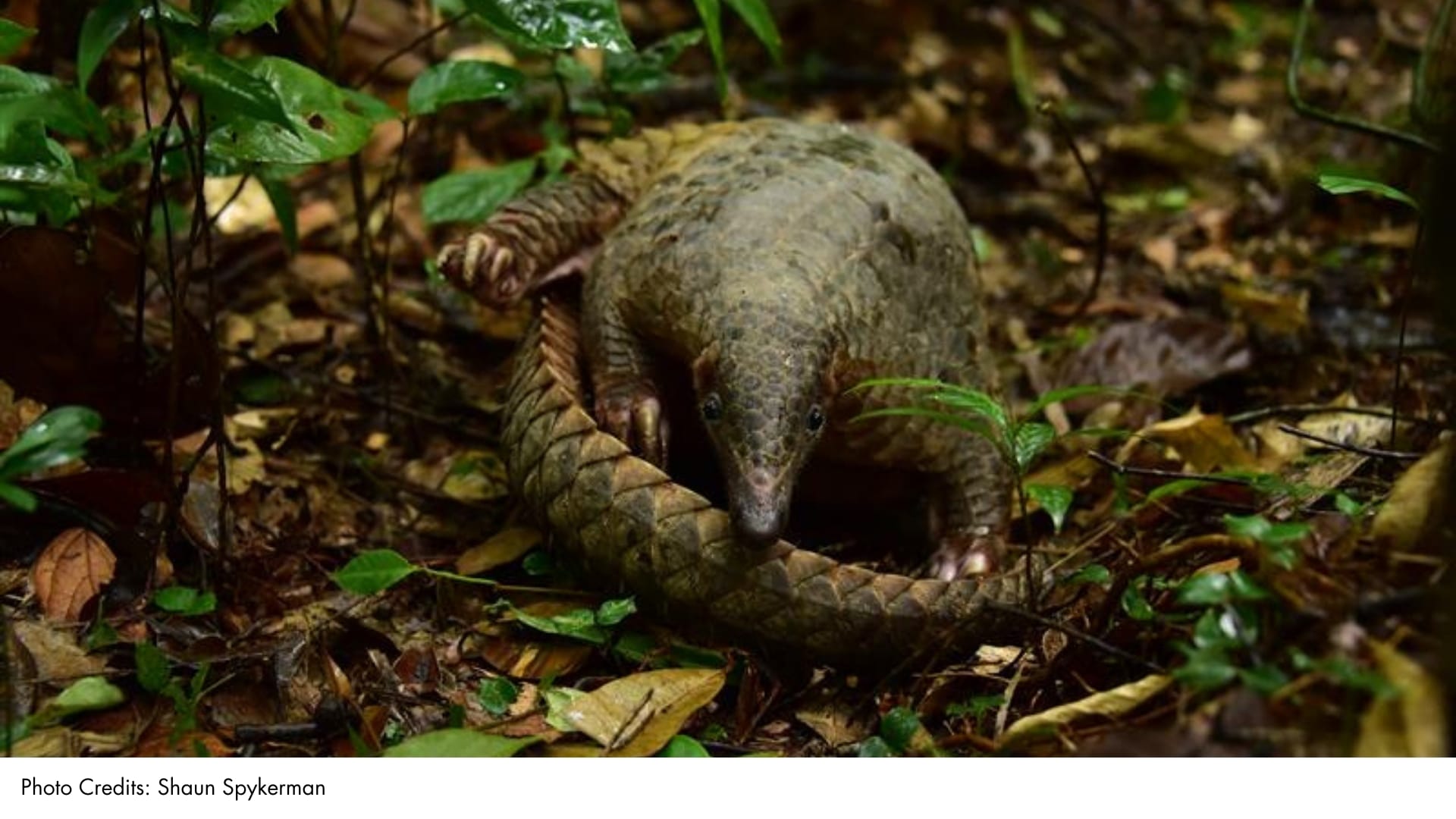
Known as one of the most trafficked animals in the world, the critically endangered Sunda Pangolin (Manis javanica) is an infrequently seen, scaly mammal that is found in Singapore. One of the main threats facing the Sunda Pangolin is poaching for its scales in traditional Chinese medicine. While the threat of trafficking is not as pervasive in Singapore, the threat of deforestation and involvement in roadkill incidents are much more significant to the continued survival of this species.
The Sunda Pangolin may be mistaken for other Southeast Asian species of pangolin such as the Palawan and Chinese pangolins, but only the Sunda Pangolin can be found in Singapore. They are sometimes referred to as the “Scaly Anteater”.
Identifying features
Check out some of the identifying features of the Sunda Pangolin below.
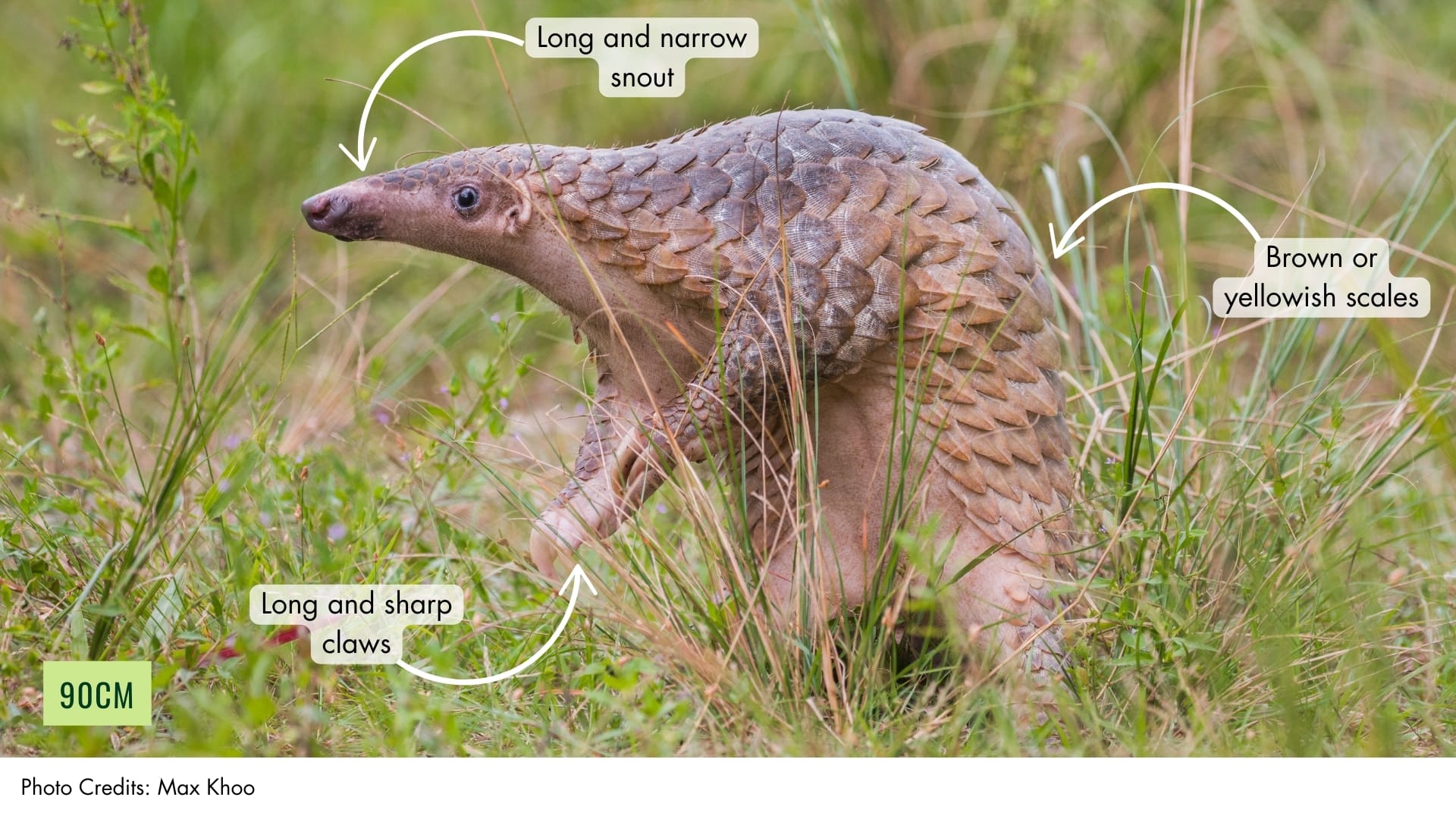
Sunda Pangolins have a long, narrow snout and a long tongue perfect for catching ants and termites. Their bodies are covered in brown or yellowish scales, and they have strong claws for digging into insect nests and for climbing. When they walk, they often shuffle along with their claws tucked under their feet.
Habitat and ecology
In Singapore, Sunda Pangolins favour forested habitats such as the Central Catchment Nature Reserve (opens in new tab), and less disturbed forests such as in the Western Catchment Nature Reserve, Pulau Ubin (opens in new tab), and Pulau Tekong.
Using their claws, they dig open termite and ant nests, and use their specialised sticky tongues to feed on the termites and ants.
When threatened, they will curl up into a ball to protect themselves.
Sunda Pangolins usually give birth to just one baby at a time, and the young pangolin rides on its mother’s back or tail. It is estimated that there are around 100 individuals still roaming in the forests of Singapore.
Learn more about the Sunda Pangolin!
Curious about the Sunda Pangolin? Here are some interesting articles you can read to learn more about them.