
Food webs in our primary forests
Discover the hidden network of life in Singapore's rainforests
Last updated on 15 June 2026
Food web in Bukit Timah Nature Reserve
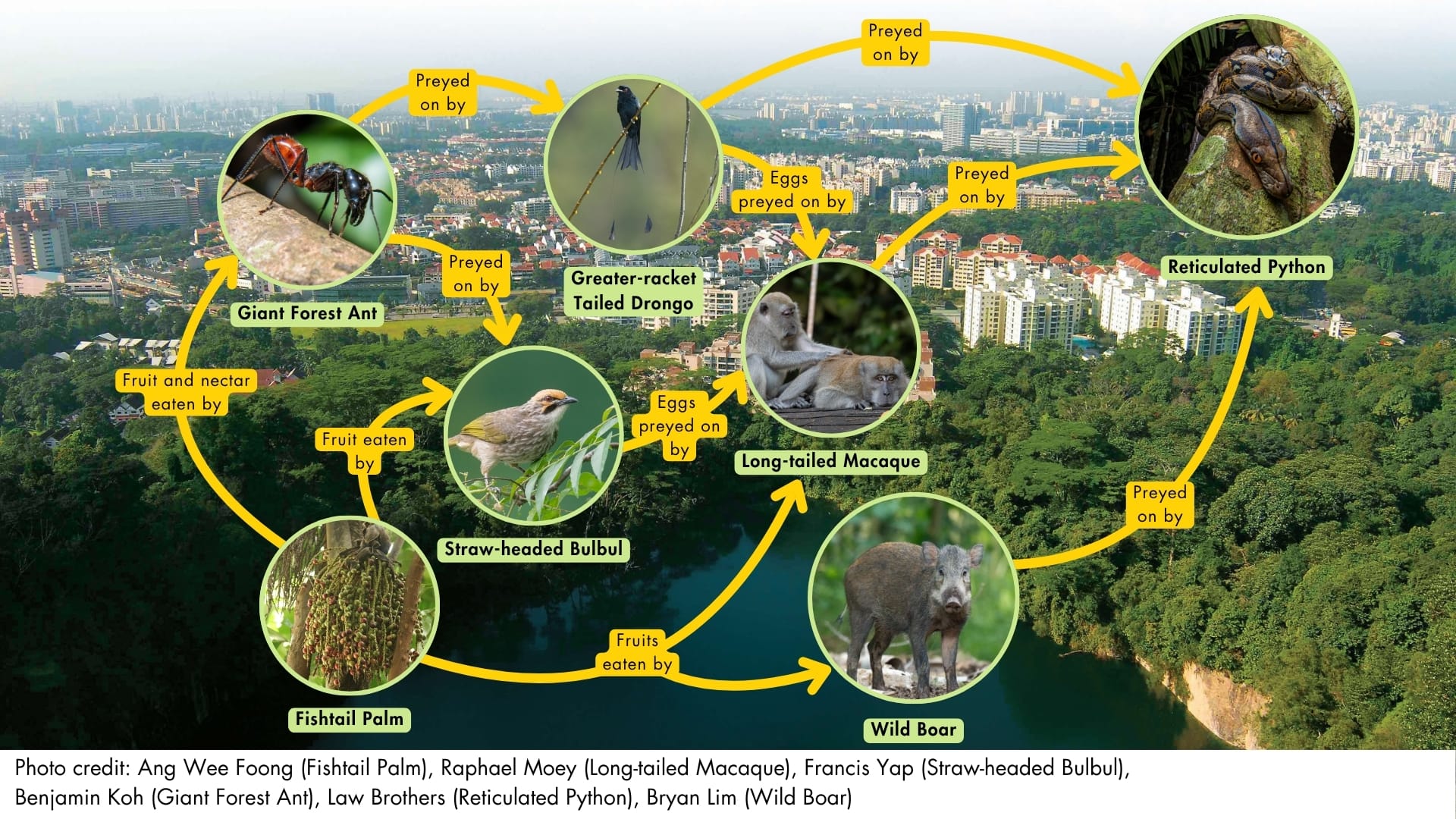
Producers
Fishtail Palms produce abundant flowers and fruit year-round, and attract swarms of pollinators and frugivores. They are very shade tolerant and grow in the understory and mature secondary forests, with some planted in urban parks and roadsides.
Consumers
Giant Forest Ants are typically nocturnal, and are one of the largest ants in the world. They feed on honeydew collected from true bugs, nectar from flowers, and scavenge or hunt for prey like other insects or small animals.
Straw-headed Bulbuls are large omnivorous birds that hunt for insects and a variety of fruits. Like other Bulbul species, they are often seen feeding on a variety of palm fruits.
Greater Racket-tailed Drongos are often seen hunting a range of insects, and have even been observed following Long-tailed Macaque troops to eat the insects stirred up by their movement.
Long-tailed Macaques are opportunistic omnivores that are usually seen eating fruits and leaves, but they will opportunistically hunt smaller animals and insects, and even steal bird eggs when they get the chance.
Wild Boars are also opportunistic omnivores that forage amongst the leaf litter on the forest floor. In addition to eating fallen fruits, they dig up roots and grubs to eat as well.
Apex predators
Reticulated Pythons are one of the largest snakes in the world, and can grow large enough to eat even a Wild Boar! They are ambush predators that use their long and muscular coils to constrict their prey before swallowing them whole.
.jpg)