
Learn the identifying features of garden birds
Learn how to identify garden birds through this simple guide!
Last updated on 26 May 2026
Guide to identifying garden birds
Learn how to identify garden birds by looking at their key features, such as colour, size and shape!
1. Colour
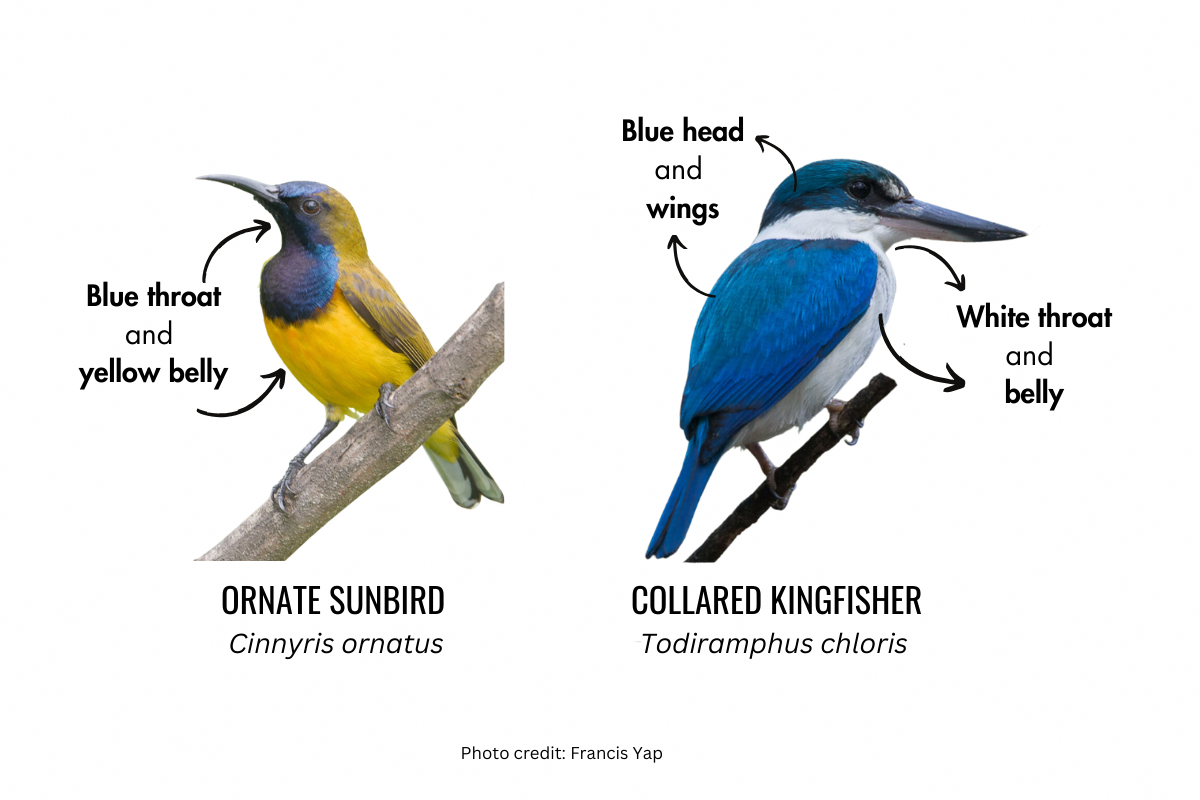
Many species have distinct colour patterns on their feathers, making it easier to tell them apart.
For example, the male Ornate Sunbird has a distinctive blue throat and yellow belly. The Collared Kingfisher has a blue head and wings, and white throat and belly.
2. Size
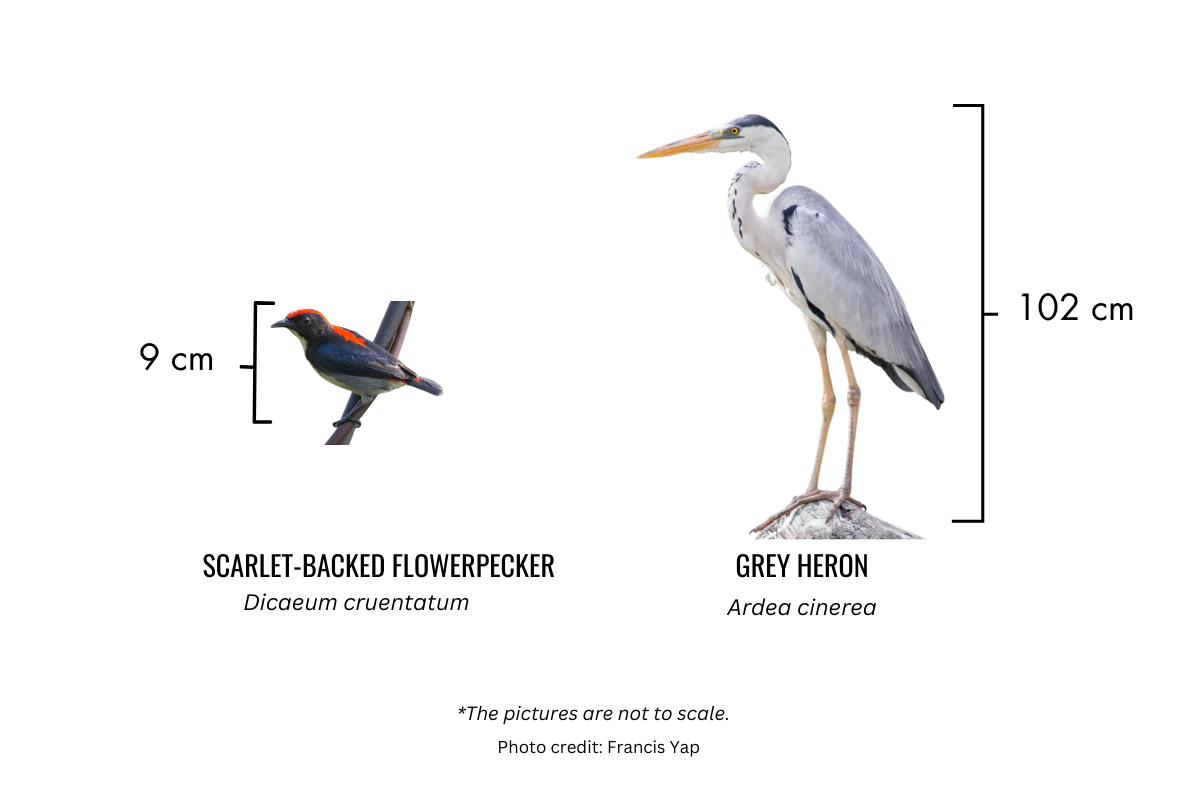
Birds come in all sizes, from tiny little birds that can fit in your hand to big ones that are as tall as a child!
We can compare the Scarlet-backed Flowerpecker, which is only 9cm big, to the much larger Grey Heron that stands at 102cm.
3. Shape
Birds belonging to a particular family often have similar body shapes, and have body parts with similar shapes.
For example, doves, such as the Spotted Dove and pigeons, such as the Pink-necked Green Pigeon have common features like small rounded heads and plump bodies with a rounded breast.
.png)
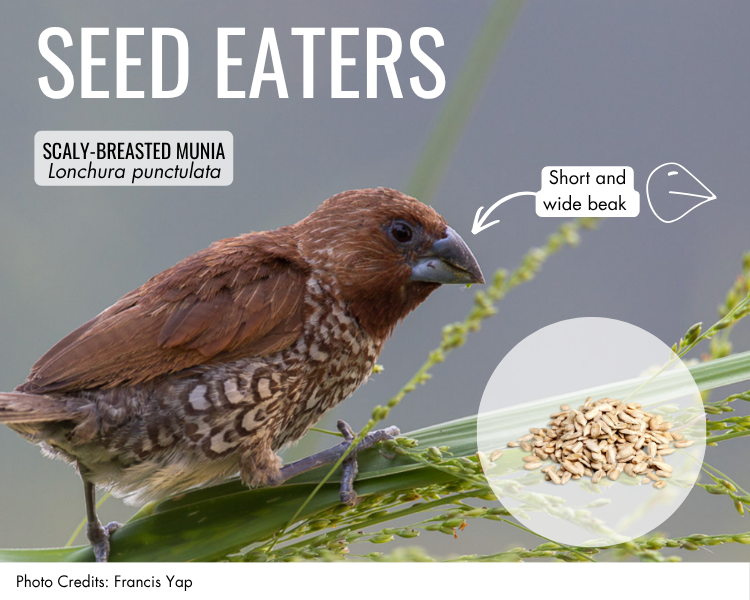
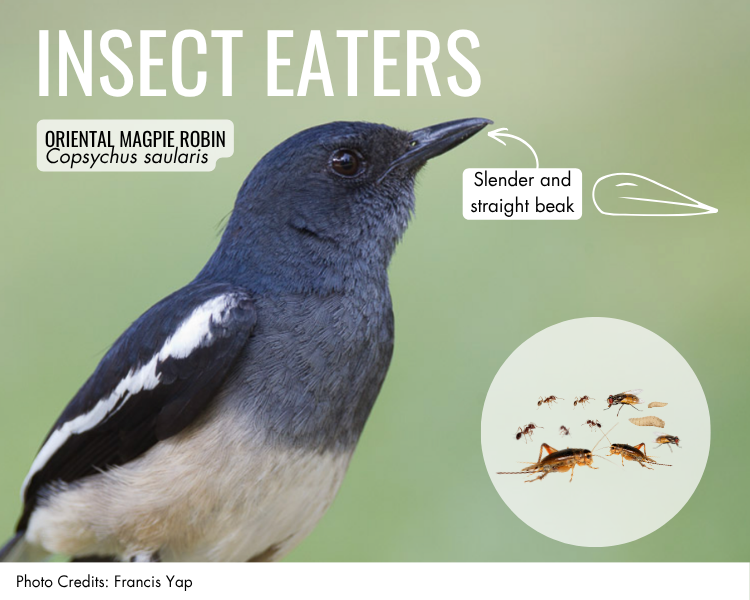
Birds also have different beak shapes depending on their diet.
Seed eaters have cone-shaped beaks to crack open seeds and nuts.
Insect eaters have thin, pointed beaks to pick insects from leaves, bark or the ground.
Nectar feeders have long, tubular beaks to reach deep into flowers to extract nectar.
Fish eaters have long, straight beaks to spear fish and pick up marine animals.
Fruit eaters have short, slightly hooked beaks to pluck and eat soft fruits.
Check out the slides below to explore the different beak shapes.
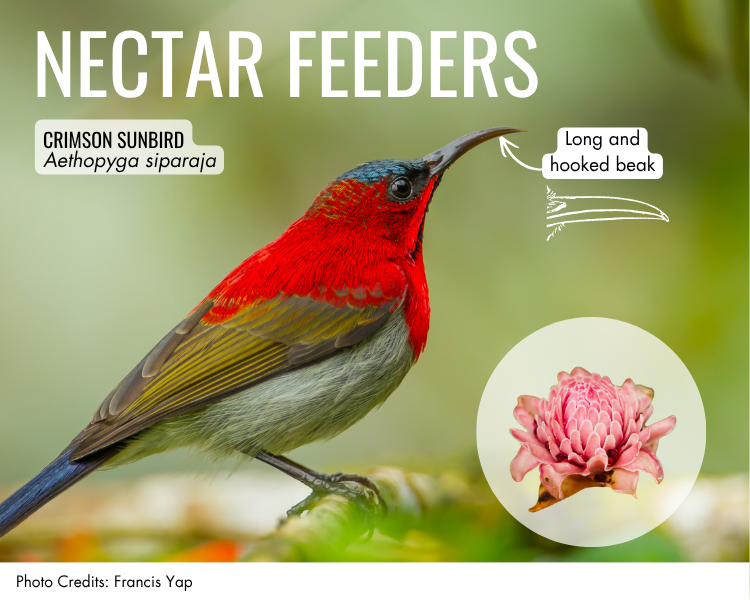
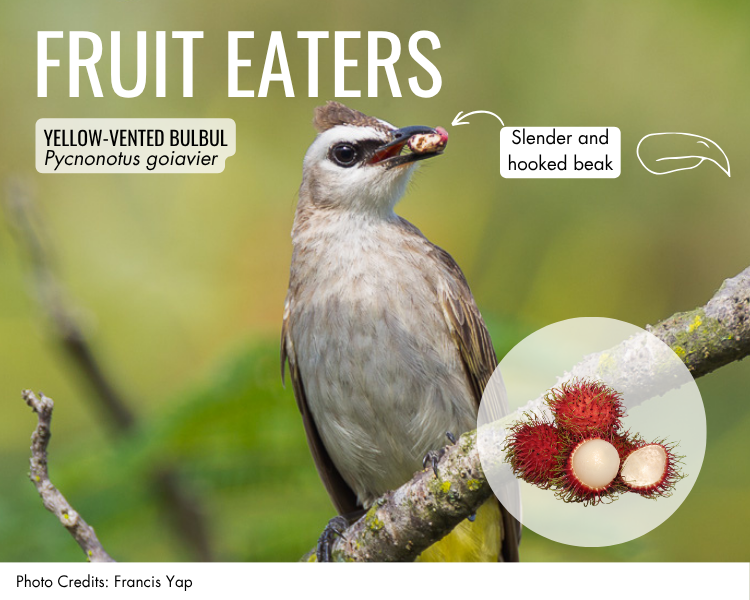
Now that you've learned how to identify garden birds, learn about some of our common bird species here!
Garden bird identification sheets
Here are some beginner identification sheets and guides to get your started on identifying your first garden birds!
Ready to test yourself on the common garden bird species in Singapore? Take a quiz here!
Join us at Garden Bird Watch!
Enjoy birdwatching, or interested to learn more about birds you see in our parks and gardens? Join us for Garden Bird Watch to collect valuable data about garden birds, which contributes to their conservation.