Common Putat
About the Common Putat in Singapore
Last updated on 15 June 2026
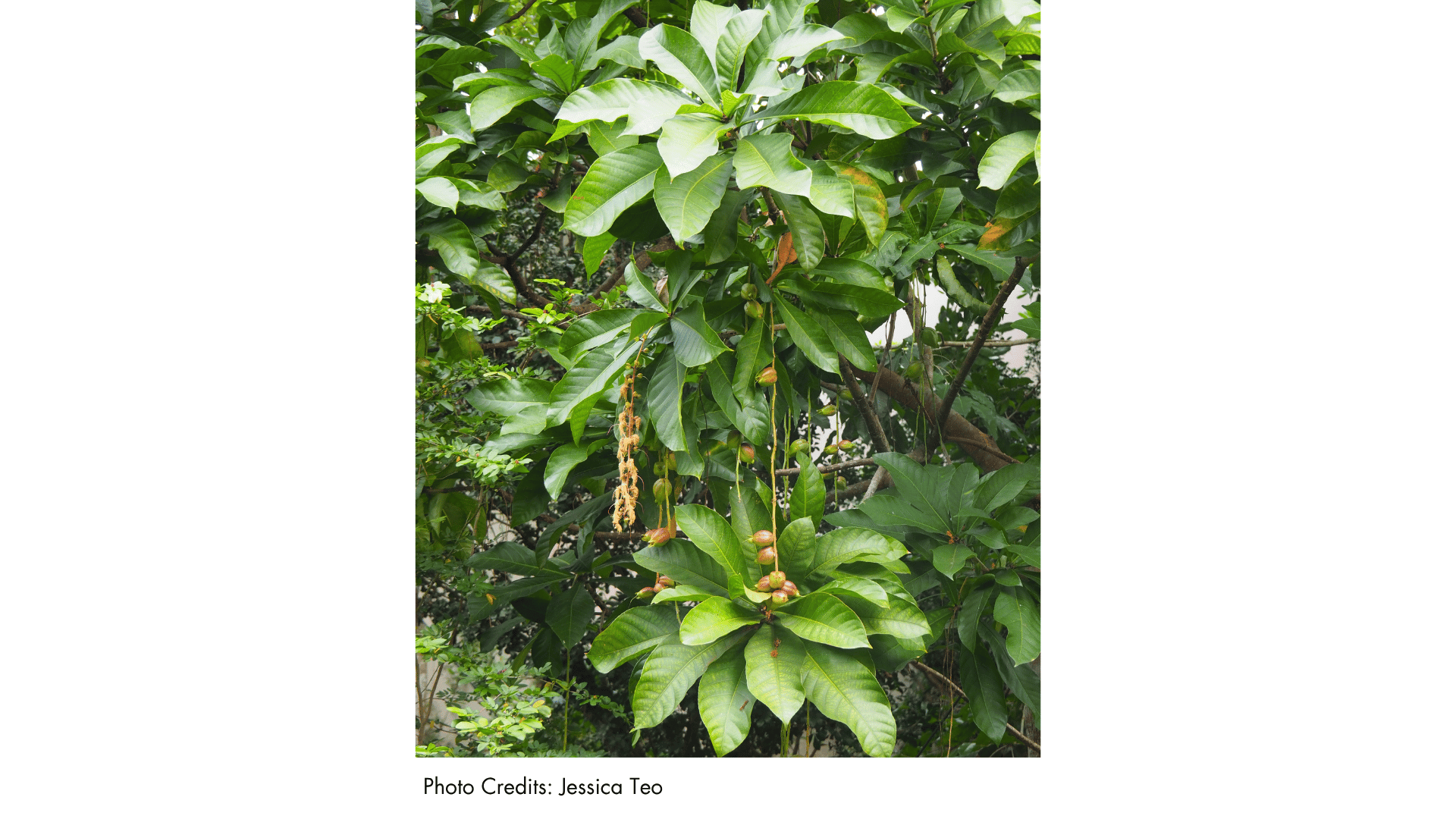
The Common Putat (Barringtonia racemosa) is a native coastal tree. These residents are primarily found in the back-mangroves, swampy areas, and along the muddy banks of our coastal streams.
Identifying features
Check out some identifying features of the Common Putat!
.jpg)
The Common Putat features very large, oblong leaves clustered tightly together at the ends of its thick branches. When the tree is in bloom, look for its spectacular, long, pendulous strings of flowers hanging downwards, packed with a dense fringe of long, pinkish-white stamens. Following the flowering phase, you can point out its slightly egg-shaped or quadrangular green fruits, which are notably smaller and less "boxy" than the large, sharply four-angled fruits of its coastal relative, the Fish Poison Tree (Barringtonia asiatica).
Habitat and ecology
Like many coastal Barringtonia species, the Common Putat blooms exclusively at night to attract moths and bats. By morning, the beautiful flowers drop to the ground or into the water below. The fibrous fruits are highly buoyant, dropping into coastal streams to be carried away by the tides.
Did you know?
Just like its larger cousin the Fish Poison Tree, the bark, roots, and seeds of the Common Putat contain saponins. Traditionally, indigenous communities would crush these plant parts and use them in slow-moving streams to temporarily stun fish for an easy catch.
Learn more about the Common Putat!
Curious about the Common Putat? Here are some interesting articles you can read to learn more about them.