Petai
About the Petai in Singapore
Last updated on 31 May 2026
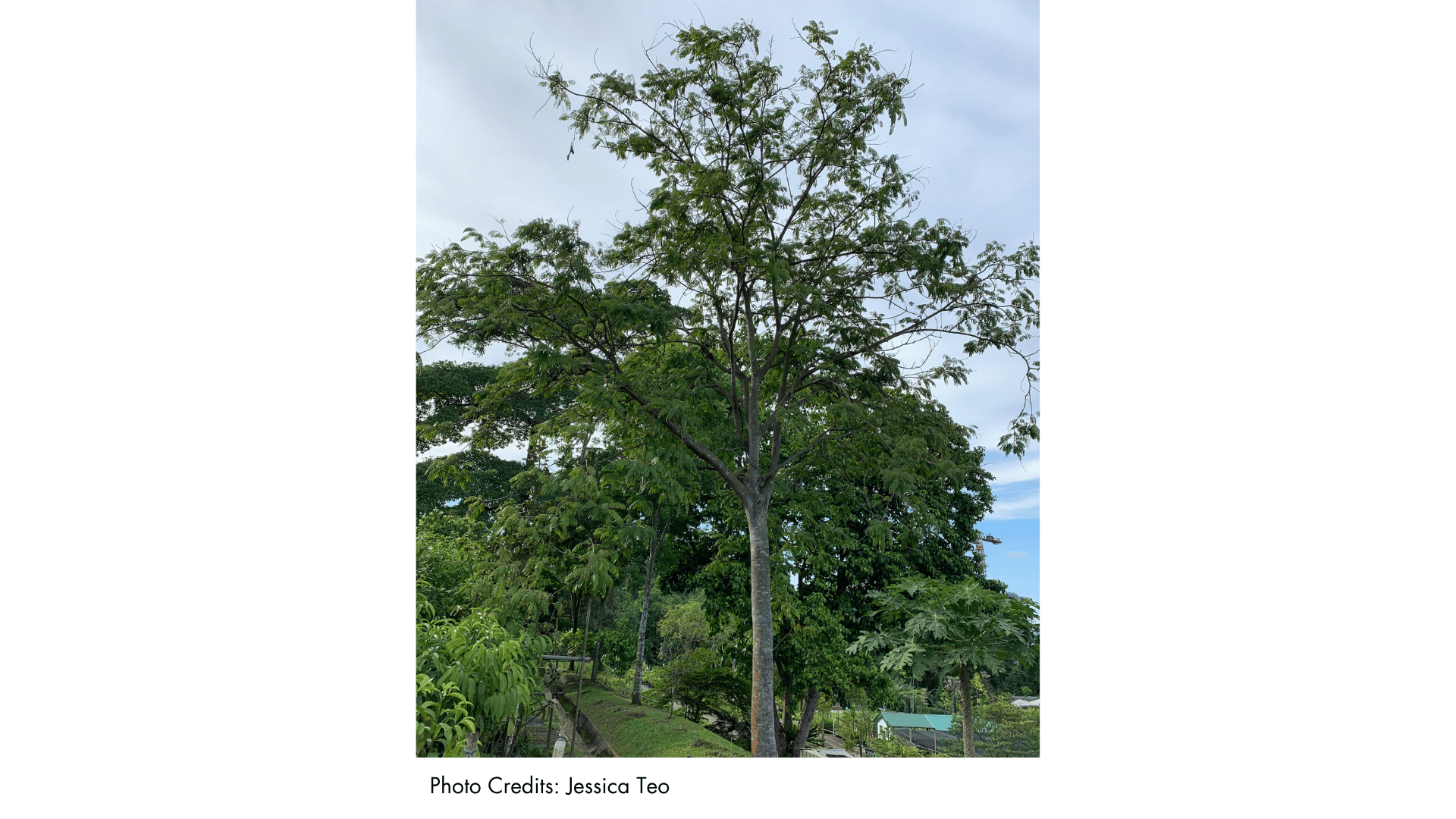
The Petai (Parkia speciosa), famously known as the Stink Bean, is a large native tree of our rainforests. While wild trees exist, they are also frequently cultivated in the region for their highly sought-after seeds.
Identifying features
Check out some identifying features of the Petai!
.jpg)
The Petai features beautiful, feather-like "bipinnate" leaves, which are divided twice to hold dozens of tiny, bright green leaflets that create a soft, airy canopy. When the tree enters its reproductive phase, look out for its highly distinct, bulbous flower heads; these light-bulb-shaped structures dangle elegantly from the ends of very long, pendulous stalks. Following the flowers, the tree produces massive, twisted, bright green pods hanging in heavy clusters, which beautifully reveal the prominent, bulging shapes of the large seeds nestled inside.
Habitat and ecology
The Petai tree relies on the bats for pollination! Those dangling, bulb-shaped flower heads open at dusk and emit a strong, musky odor specifically designed to attract nectar-feeding bats flying through the forest canopy.
Frequently asked questions
Q: Is this the same Petai used in local cooking?
Yes, it is! The bright green seeds inside the pods are famous in Southeast Asian cuisine, especially in dishes like sambal petai. However the beans contain complex sulfur compounds that will give a very distinct, strong odor to your breath and urine after eating them!
Learn more about the Petai!
Curious about the Petai? Here are some interesting articles you can read to learn more about them.