
Blue Sprite
About the Blue Sprite in Singapore
Last updated on 2 June 2026
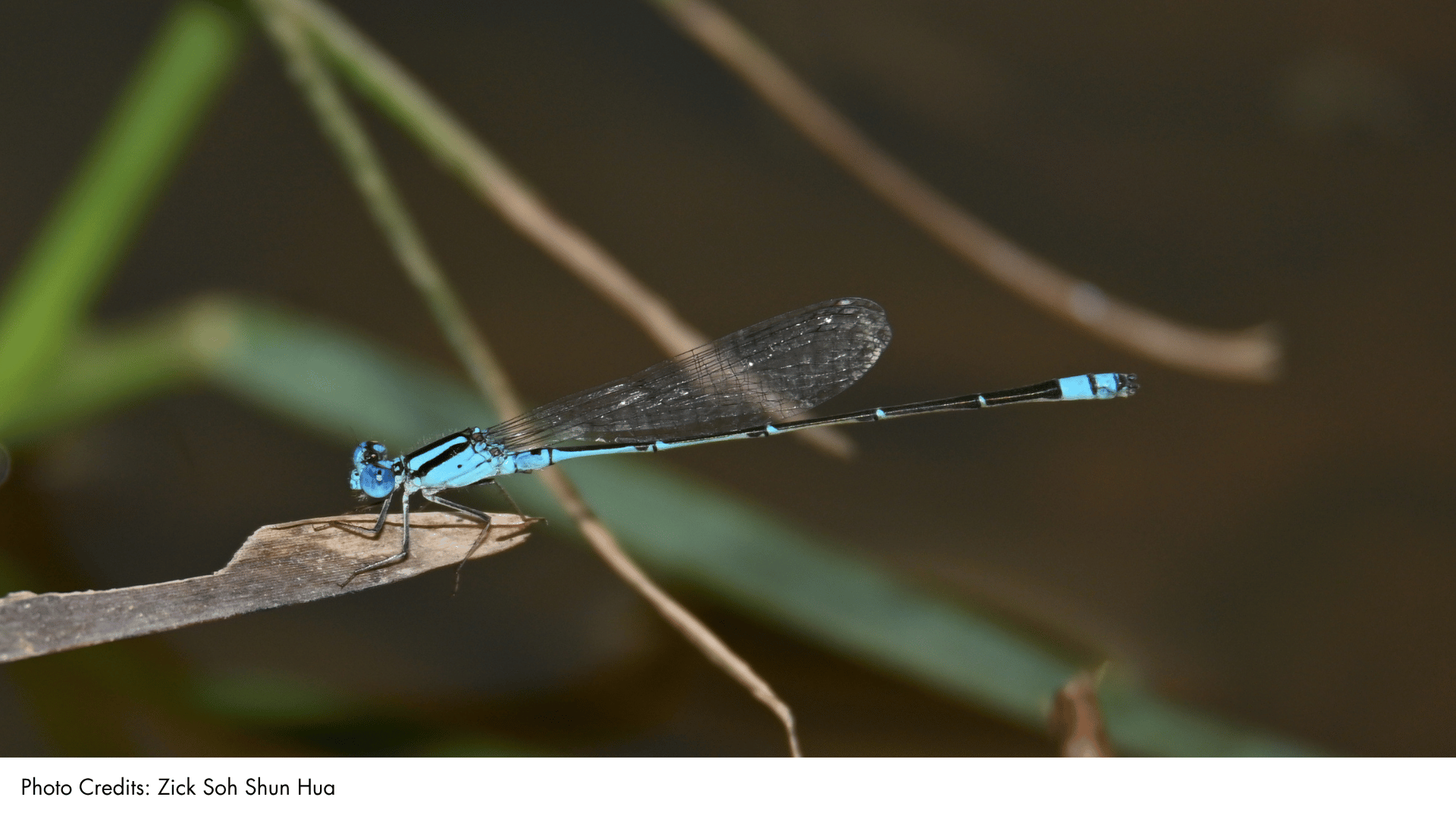
The Blue Sprite (Pseudagrion siamense) is a highly adaptable resident and easily the most common damselfly found near Singapore's urban waterbodies, park ponds, and drains. The taxonomy of the Blue Sprite has been split and updated recently. As part of this revision, Singapore's populations previously identified as Pseudagrion microcephalum was reassigned to Pseudagrion siamense.
Identifying features
Check out some identifying features of the Blue Sprite!
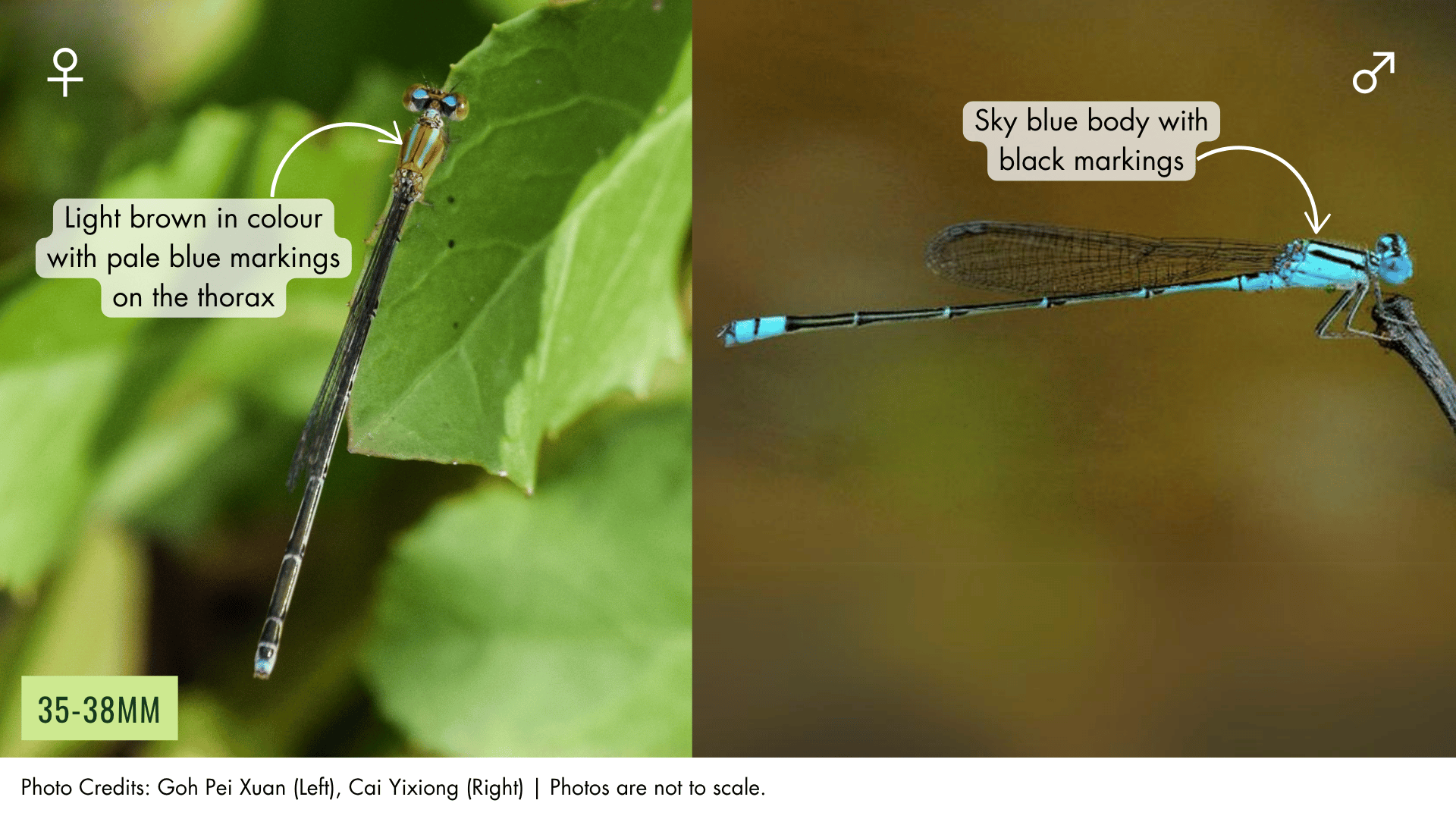
The male Blue Sprite features an unmistakable, vibrant sky-blue body with distinct black bands running horizontally across its thorax. Additionally, the black bar between the two solid blue segments at the end of its abdomen is wide and obvious compared to Look-alike Sprite (Pseudagrion australasiae). Females are much more camouflaged, appearing generally pale olive with only very thin blue streaks.
Interested to learn more about how to identify Dragonflies? Check out our simple guide on identifying Dragonflies!
Habitat and ecology
They are relatively weak flyers compared to the larger dragonflies. You will usually find them flying just inches above the water's surface or perching very low on emergent grass stems and floating twigs.
Frequently asked questions
Q: How do I tell the difference between a dragonfly and a damselfly?
Dragonflies and damselflies can generally be distinguished by their resting posture and anatomy. Generally, dragonflies hold their wings flat and completely outstretched horizontally, whereas damselflies fold their wings back tightly along their abdomen. Damselflies also generally feature much thinner, stick-like bodies and eyes that are separated on the sides of their heads. However, there are exceptions to these rules. For instance, some dragonflies, such as those in the Gomphid family, also possess separated eyes.
Join us at Dragonfly Watch!
Enjoy spotting dragonflies, or interested to learn more about the ones you see in our parks and gardens? Join us for the Dragonfly Watch to collect valuable data about local species, which contributes to their conservation.
Learn more about the Blue Sprite!
Curious about the Blue Sprite? Here are some interesting articles you can read to learn more about them.